
Two sides of the same coin
Being sustainable is as much about tackling climate change as it is about being nature positive. It is about tackling global issues as well as addressing the local needs of people and communities living and benefitting from a thriving natural environment.
Our communities also benefit from the employment opportunities we can offer, and we aim to maintain connections that support people and communities to access those opportunities through engagement and an open-door approach. This improves social mobility, a topic we are passionate about.
Our care for the planet translates in our decision to invest in fuel efficient plant and in our transition to using alternative fuels such as HVO fuel. This reduces emissions on our live projects.

Opening Doors to Young People in Hertfordshire
Significant pockets of social deprivation are reported to exist in communities adjacent to affluent businesses based in Hertfordshire and surprising levels of need exist in areas close to our offices in Borehamwood. Some of the underlying causes are reported to include low income, poor health and educational challenges with similar challenges being reported to exist within communities in Hatfield and Cheshunt.
As a responsible Hertfordshire-based business, we aim to procure goods and services from Hertfordshire-based SMEs. We also understand our role in providing access to employment opportunities for people living in our locality.
A good proportion of people employed at our head offices live within Hertfordshire and we are working to improve our reach engaging with Hertfordshire Services for Young People (SfYP), an organisation providing targeted support to young people facing serious challenges in their lives.
GSS has committed to providing several one-week work experience placements to Year 10 pupils referred by schools across Hertfordshire to SfYP. These placements provide a vital connection to employers, helping to widen the options and aspirations of the young people involved. With youth unemployment on the rise in the UK and social mobility on the decline, these partnerships with local community organisations are vital.
The construction industry can be a lever for social justice.This is why our parent company Morrisroe Group has made a three-year commitment to directly fund the work of the Construction Youth Trust (CYT). CYT leverages construction industry employer networks so that disadvantaged school leavers can secure a better start in life. In parallel, they run targeted programmes that connect young people from underrepresented groups and low-income backgrounds with construction employers and the opportunities they would not otherwise have considered.
Repurposing Buildings
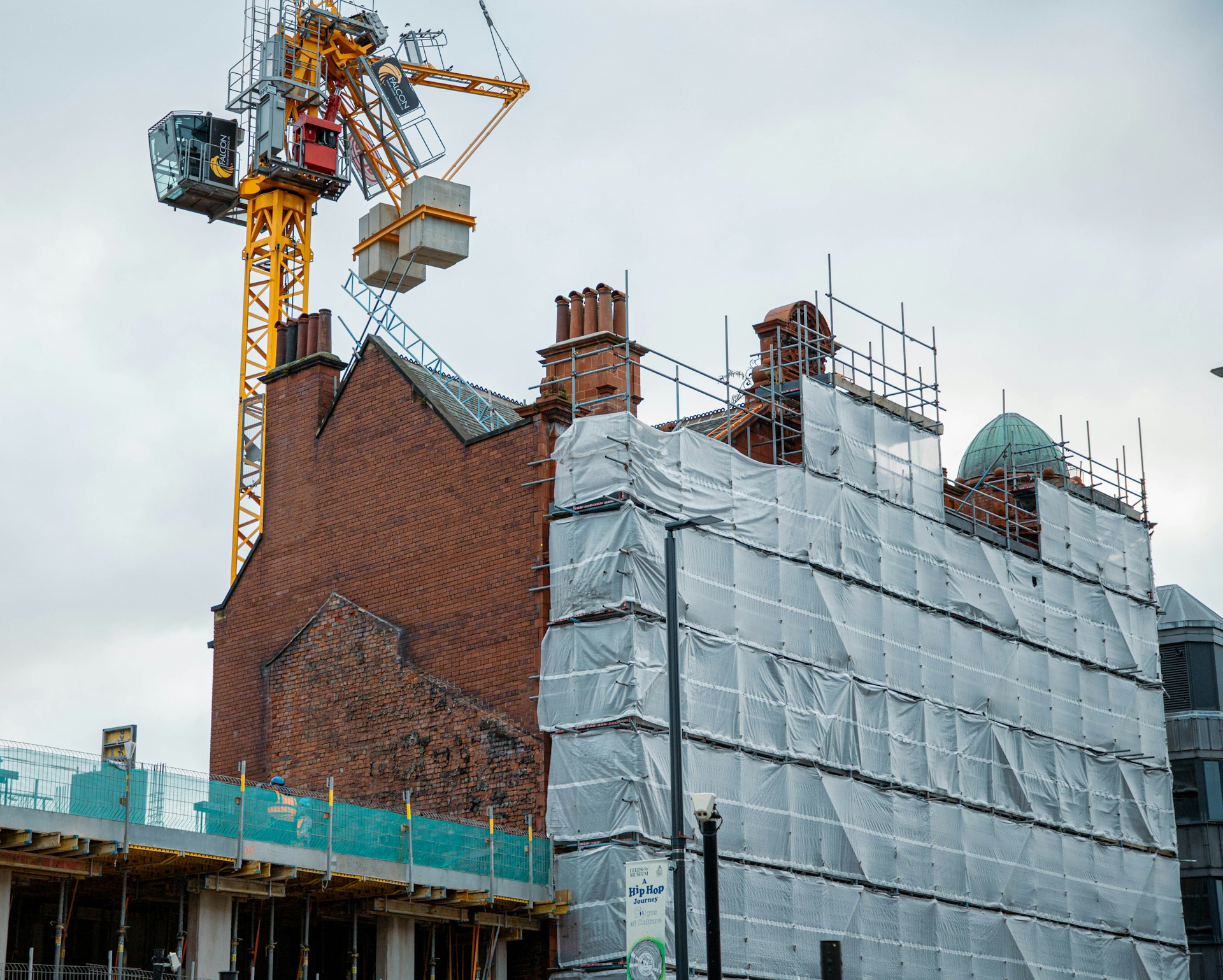
We often support our clients to repurpose and re-fashion buildings to meet modern standards. Our engineering, design and mini piling capabilities are central to our ability to support our clients to re-engineer, re-imagine and repurpose buildings for the future.
Repurposing buildings often involves the retention of existing building elements. Our solutions might involve the strengthening of existing foundations and structural columns to avoid their replacement and the extending of existing floor plates, commonly required on projects involving the repurposing of historic buildings or buildings with heritage character.
Our work at Minerva House (now the Delft) showcased our ability to strengthen existing structures and extend an existing structure both laterally and vertically. This was a project involving several companies and capabilities in the Morrisroe Group.
Repurposing historic stables at 10 Garrett Street
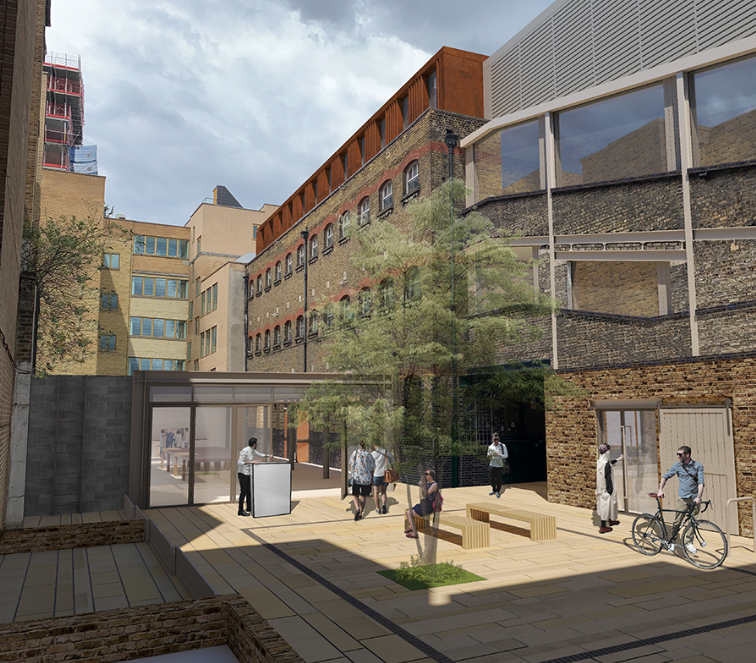
Our recent work at a historic stable block in central London is a typical example of a repurposing project. The client wished to create modern offices that retained the historic character of the existing building. GSS piling was contracted by Phase One Construction to design and install 40No 300mm diameter piles within a courtyard.
Adaptive reuse at Sackville House
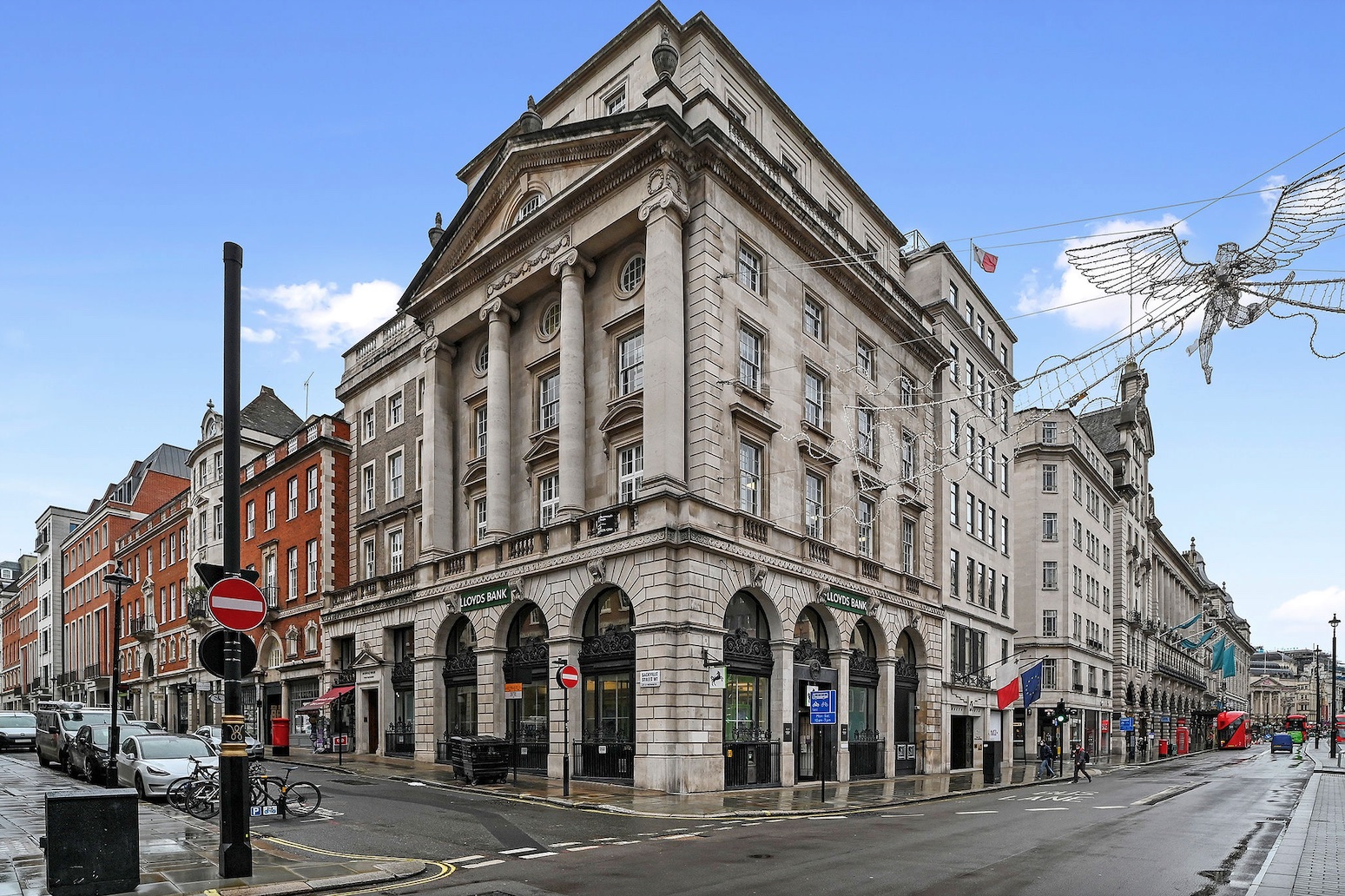
As part of the redevelopment of Grade II listed Sackville House in Piccadilly, we delivered a series of both temporary and permanent piles. Working initially for Salter Demolition and latterly for Red Construction, we installed 8No 300/344mmdiameter temporary piles, 51No 450/508mm diameter permanent piles and 12No 450/508mm diameter crane base piles. We worked closely with both contractors and the employer to ensure best value was achieved.
Net Zero Collaborations
Achieving net zero is a team sport. Businesses across the Morrisroe Group are actively involved in industry initiatives that help to decarbonise the Built Environment. We also aim to collaborate with our clients to optimise designs and minimise the reprocessing of raw materials.
Increasingly, we work on repurposing projects where buildings are adapted, extended andr epurposed in some way.
The Engineers Reuse Collective
In line with our client’s net zero objectives, our approach to sustainability has shifted from a primary focus on recycling and reducing waste to landfill to a broader focus encompassing regenerative principles and circularity. Restorative solutions we can offer include designing for pile reuse.
GSS Piling is an affiliate member of the Engineers Reuse Collective whose mission it is to increase reuse in the Built Environment, support the transition to the circular economy and reduce the carbon intensity of the Built Environment.
Engineers Declare
Our group-wide net zero ambitions are further supported by commitments made by our structural design practice, Kingscote Design Limited, who are signatories to UK Structural Engineers Declare. Engineers Declare is part of the Built Environment Declares Climate and Biodiversity Emergency campaign where professionals from across the built environment, from architects to building contractors, acknowledge the extreme seriousness of the climate situation. The declaration is a public commitment to positive change and means that our design practice is committed to designing out carbon wherever possible in line with circular economy design principles.
For everyone working in the field of engineering, meeting the needs of our societies without breaching the earth’s ecological boundaries will demand a paradigm shift in our behaviour. If we are to reduce and eventually reverse the environmental damage we are causing, we will need to re-imagine our work as indivisible components of a larger, constantly regenerating and self-sustaining system," Engineers Declare states.
Construct Trade Association Sustainability Forum
In 2025, Dan Bannister, Group HSEQ director, was appointed Chair of the CONSTRUCT Sustainability Forum, with a view to helping the concrete structures sector to pull together to accelerate the decarbonisation of the built environment.
Our Net Zero Targets
We are working with our sister businesses in the Morrisroe Group to reach net zero targets, aiming to be carbon net zero in relation to scope 1 and 2 emissions by 2030. This will involve moving all of our transportation and haulage fleets over to alternative (non-diesel) fuel sources, as well as moving our energy tariffs over to 100% renewable sources.
Progress in FY25
Emissions from our HGV and Tipper fleets are the largest component of our Scope 1 and 2 emissions. Our target of moving all NRMM plant to HVO to reduce emissions and improve energy efficiency continues to make progress, and we have made significant reductions in emissions from our NRMM fleet. In FY25 as a Group, we doubled the use of HVO Biodiesel, using 150,000 litres of HVO as opposed to white diesel. HVO fuel now makes up around 50% of our NRMM fuel.
We can also utilise river-based transportation using barges and pontoons when available, which can result in significant reductions to CO2e of the materials being transported.
Moving forward, we are committed to reducing emissions by migrating to low emissions fuel for our HGV fleet. This will be achieved by upgrading our fuel storage capability and refuelling at our yard premises.
Scope 3 emissions targets
In relation to our indirect scope 3 emissions, we’re committed to using 100% net zero concrete by 2050 and meeting ambitious interim targets involving procuring 30% low emissions concrete on all projects by 2025 and 50% by 2030.
Concrete Zero commitments
We have made these commitments as a signatory to ConcreteZero, an industry initiative driven by the Climate Group together with World GBC and the World Business Council for Sustainable Development (WBCSD).
Morrisroe is a founding member of ConcreteZero. Members include several of our clients as well as leading engineering and design practices such as Mace, Multiplex, Lendlease and WSP UK.
Accelerating Concrete Decarbonisation Group
We are also involved in an initiative that aims to tackle the systemic barriers to the optimisation of concrete design and construction. This group pools the expertise of leading engineering practices and concrete specialists, as part of Derwent’s Accelerating Concrete Decarbonisation Group. Together, we are developing and testing low carbon concrete prototypes for different building typologies. This is a timely piece of work in view of the decreasing availability of GGBS, a costly product which many of our clients have to specify due to there being few alternatives for reducing the CO2e of concrete.
Tackling Our Carbon Performance
We can both positively influence upfront carbon assessments and targets as well as track our carbon performance during the construction phase from demolition and deconstruction through to piling, groundworks and concrete structures, providing carbon data on A1-A5 and C4 (demolition carbon arisings) emissions categories.
Carbon performance data is captured digitally and includes data relating to material reuse that is used to general project-specific sustainability data reports. This complements the detailed technical advice we are providing clients in relation to embodied carbon factors for deconstruction as well as for new RC and PT structures.
Whole lifecycle assessment
As a group, we collect wide-ranging emissions data. Our environmental data collection software enables us to both monitor and manage consumption and wastage rates on each project. Data collected includes key materials sourced as well as focused data on energy, fuel use, water consumption and wastage, business travel and commuting.
From this, we provide our clients with project-specific sustainability reports including data on LCA stages A1-A3, LCA stage A4 and LCA stage A5. This carbon and energy performance data also feeds into our annual Group streamlined energy and carbon report.

HVO & Alternative Fuel Utilisation
The use of fossil fuels on construction sites generates the majority of Scope 1 carbon emissions in the industry, including our own. These are direct emissions from owned or controlled sources, such as fuel combustion in trucks or equipment.
To reduce these, we have worked closely with clients to present a clear case for switching to HVO fuel wherever possible.
HVO fuel is a diesel alternative derived from vegetable matter. It is sustainably produced and biodegradable which, as well as cutting emissions, reduces the risk of an environmental incident resulting from a spillage. Additionally, using HVO reduces NOx (nitrogen oxide gases produced from the combustion of fossil fuel) and small particle emissions, improving air quality in confined spaces.
“All our heavy piling rigs are HVO fuel compatible and all rigs have been fitted with fuel efficient Stage V engines. We also train our rig operators continuously to ensure they are familiar with the latest techniques and manufacturer guidance, particularly in relation to power utilisation. This training improves rig utilisation and fuel efficiency, which also reduces scope 1 carbon emissions on site”.
Devji Bhuva, GSS Piling Technical Director
Pioneering Projects
Switching to HVO fuel enables us to achieve a huge 90% reduction in carbon emissions (compared with using diesel fuel). Some of our projects, including Camden Goods Yard, have been using HVO fuel as a primary fuel for both plant and machinery. At others, like the Elephant and Castle Town Centre project, most of our plant has been operated using this sustainably produced fuel.
At Camden Goods Yard alone, we have predicted a total CO2 saving of 430,000 kgTCO2e from activities with fuel usage. To put this into context, that's the carbon output of a 1,068,713 mile drive by the average car (or 94 passenger vehicles driven for a year).
We will continue to encourage our clients to make the switch to diesel-free construction and commit to a future with lower and lower carbon emissions.